
Table of Contents
- What Makes an EDC Knife Right for Daily Tasks?
- Quick Comparison: Top EDC Knives for Everyday Utility
- 1. Spyderco Para Military 2: The Ergonomic Hard-Use Standard
- 2. Benchmade Mini Griptilian: The Secure One-Handed Operator
- 3. Kershaw Bel Air: Premium Steel in a Lightweight Frame
- 4. CJRB Pyrite: The Budget Button Lock That Punches Up
- 5. Cold Steel 4-MAX Scout: Overbuilt Strength for Tough Chores
- 6. Chris Reeve Sebenza 31: The Precision Investment
- How to Choose Based on Your Daily Routine
- Frequently Asked Questions
Last Updated: September 8, 2026
The best EDC knife for daily tasks is the one that disappears into your pocket until you need it, then feels like an extension of your hand. Specs on paper rarely tell the full story of daily utility. Below, we break down picks that earn pocket space, from hard-use standards to budget-friendly button locks.
Most guides treat knife selection like a spec sheet race, but the real question is fit. The picks here are grouped by what they do best.
What Makes an EDC Knife Right for Daily Tasks?
An everyday carry knife must open reliably with one hand, lock securely, and hold an edge through routine cutting. These three requirements filter out more knives than any price tag.
Blade steel matters for edge retention and corrosion resistance, but the best steel depends on your environment. MagnaCut resists rust and keeps an edge long, ideal for humid climates or food prep (knifesteelnerds.com). Simpler steels like AUS-10A cost less and sharpen easily.
Ergonomics decide whether you actually carry the knife. A handle with good texture and a grip that fills your hand reduces fatigue. The locking mechanism also plays a role: liner locks and frame locks dominate, but button locks and the patented AXIS lock offer ambidextrous operation.
Quick Comparison: Top EDC Knives for Everyday Utility
The table below summarizes the key specs and intended use for each knife in this guide. Pricing depends on quantity, dates, and delivery.
| Knife | Blade Steel | Lock Type | Starting Price | Best For |
|---|---|---|---|---|
| Spyderco Para Military 2 | CPM-S45VN | Compression Lock | $200 | Hard use and demanding tasks |
| Benchmade Mini Griptilian | 154CM | AXIS Lock | $150 | Frequent daily use, secure lock |
| Kershaw Bel Air | MagnaCut | DuraLock | $160 | Premium materials, lightweight carry |
| CJRB Pyrite | AR-RPM9 | Button Lock | $50 | Budget EDC, fidget-friendly |
| Cold Steel 4-MAX Scout | AUS-10A | Tri-Ad Lock | $90 | Heavy-duty outdoor chores |
| Chris Reeve Sebenza 31 | MagnaCut or S45VN | Integral Lock | $450 | Collectors, precision investment |
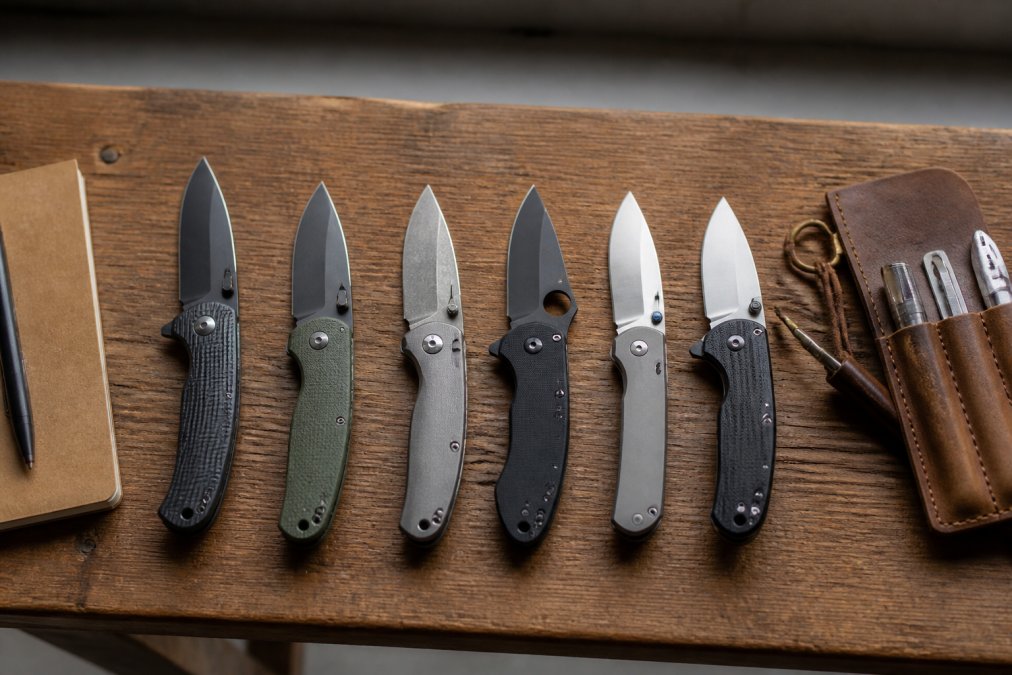
A common mistake is choosing a knife based on blade length alone. Legal blade length varies by state and local ordinance, so check your jurisdiction before buying.
Ergonomics: Handle Size vs. Hand Size
Spec sheets rarely tell you how a knife feels in your palm. The most overlooked factor is the relationship between handle length and your hand size.
Here is a practical guide based on handle length and typical hand sizes:
- Handles under 4 inches (e.g., Mini Griptilian, CJRB Pyrite): These suit small to medium hands (glove size S or M). Users with larger hands (glove size L or XL) will find their pinky finger sliding off the end, which reduces control during hard cuts. If you wear an XL glove, skip handles under 4.2 inches unless you prioritize pocket concealment over grip security.
- Handles between 4 and 4.5 inches (e.g., Para Military 2, Bel Air): This is the 'Goldilocks' zone. It accommodates medium to large hands comfortably. Users with small hands may find the handle too thick or long for precise, detailed cuts, but the extra length provides leverage for tougher tasks.
- Handles over 4.5 inches (e.g., Cold Steel 4-MAX Scout): These are designed for large hands or gloved use. For users with small or medium hands, the bulk becomes a liability, making the knife feel unwieldy for fine tasks like opening envelopes or stripping wire.
The Finger-Chop Test
Before you buy, hold the knife in your dominant hand and make a fist around the handle. Your index finger should rest comfortably in the choil or against the guard without being cramped, and your pinky should not hang off the end. If your pinky hangs off, the handle is too long. If your index finger feels pinched, the handle is too short.
How Handle Material Affects Grip Over Time
Handle material directly affects grip security as your hands change throughout the day. G-10 (Para Military 2) provides aggressive texture that works well with wet or sweaty hands but can feel abrasive against bare skin during extended carry. Stainless steel (Pyrite, Sebenza 31) feels smooth and premium but becomes slippery when wet. Griv-Ex (4-MAX Scout) balances texture and flexibility, though it feels less dense than metal or G-10.
For users who need a compact tool for frequent daily use, the Benchmade Mini Griptilian delivers the patented AXIS lock, an ambidextrous mechanism that locks the blade securely while allowing smooth one-handed operation. The 154CM stainless steel blade offers solid edge retention and easy sharpening, making it a practical choice for users who maintain their own edges. Glass-filled nylon handle scales keep weight down, though they feel less premium than metal alternatives.
1. Spyderco Para Military 2: The Ergonomic Hard-Use Standard
Certain knives are benchmarks for ergonomic design in hard-use folding knives. Their compression locks provide high-strength security while allowing the blade to be closed without placing fingers in the blade path. A signature round hole enables gloved or one-handed operation, and G-10 handle scales deliver superior grip even when wet.
What stands out in practice is the blade geometry. A full-flat grind slices through cardboard, rope, and food with less resistance than hollow-ground alternatives. The larger footprint in the pocket is the tradeoff, but for demanding tasks requiring a strong and reliable blade, such a knife justifies the bulk. Manufacturing quality is evident in the fit and finish, with no blade play after extended use.
2. Benchmade Mini Griptilian: The Secure One-Handed Operator
For users who need a compact tool for frequent daily use, the Benchmade Mini Griptilian delivers the patented AXIS lock, an ambidextrous mechanism that locks the blade securely while allowing smooth one-handed operation. The 154CM stainless steel blade offers solid edge retention and easy sharpening, making it a practical choice for users who maintain their own edges. Glass-filled nylon handle scales keep weight down, though they feel less premium than metal alternatives.
The real strength of some knives is their locking strength. Certain locks engage the blade from both sides, reducing the chance of accidental closure. Some manufacturers back their products with a lifetime warranty and service.
3. Kershaw Bel Air: Premium Steel in a Lightweight Frame
Some knives pair MagnaCut blade steel with a lightweight frame, offering excellent corrosion resistance and superior edge retention in a package that disappears into your pocket. Certain lock mechanisms provide secure blade locking, and a reversible deep-carry pocket clip accommodates left- or right-handed carry. Smooth deployment action makes it satisfying to open, whether you use the thumb stud or the flipper tab.
What most reviews miss is how certain knives handle in wet conditions. The corrosion resistance of MagnaCut means you can use it for food prep or outdoor tasks without worrying about rust. The higher price point is the main drawback, but for those seeking premium materials and lightweight portability, such a knife earns its place.
4. CJRB Pyrite: The Budget Button Lock That Punches Up
Some knives prove that a quality EDC knife does not require a three-figure budget. Their button lock mechanism allows easy one-handed use, and an AR-RPM9 powder steel blade offers respectable edge retention for the price. An ergonomic stainless steel handle provides a solid grip, though it can get slippery in wet conditions.
What makes some knives stand out is their value-to-performance ratio. At roughly a quarter of the price of premium options, they deliver smooth deployment, a secure lock, and a versatile drop-point blade profile. They are also very fidget-friendly. For budget-conscious EDC enthusiasts, these are picks that punch above their weight.
5. Cold Steel 4-MAX Scout: Overbuilt Strength for Tough Chores
Some knives are designed for heavy-duty outdoor or industrial daily tasks where standard folders would fail. Their lock systems provide near-fixed-blade strength, and an AUS-10A steel blade handles demanding cuts without chipping. A Griv-Ex handle offers high impact resistance, and the overall construction feels overbuilt in the best sense.
The tradeoff is weight and bulk. This knife is heavy and bulky for standard office carry, so it suits users who work outdoors, on job sites, or in industrial settings. Given its size and capability, it is remarkably affordable.
6. Chris Reeve Sebenza 31: The Precision Investment
Some knives represent a gold standard for high-end EDC knives, with precision engineering that sets them apart from production folders. Their integral locks, a refined frame lock, provide rock-solid blade retention, and titanium handle construction offers durability with a premium feel. Blade steel options include CPM MagnaCut or S45VN, both excellent for edge retention and corrosion resistance.
What justifies the price of some knives is the build quality and tolerances. They operate with a smoothness that comes from precise machining, and they hold up to years of daily use without developing blade play or pivot issues. They also retain resale value exceptionally well. For collectors and users who prioritize precision above all, these are definitive choices.
How to Choose Based on Your Daily Routine
Matching a knife to your routine is only half the battle. The other half is keeping it functional. Here is a practical, beginner-friendly maintenance routine that will keep any of the knives above performing like new.
The 5-Minute Weekly Clean
You do not need a workshop to maintain a modern folder. A weekly routine of five minutes prevents the two most common failures: a gritty pivot and a dull edge.
- Open the blade and blow out debris. Use compressed air or a can of keyboard duster to clear pocket lint and dust from the pivot area. This simple step prevents the 'gritty' feeling that develops from everyday carry.
- Apply one drop of lubricant. Use a high-quality oil like Nano-Oil or a general-purpose tool oil. Place a single drop on the pivot point where the blade meets the handle. Work the blade open and closed a few times to distribute the lubricant. Do not over-oil; excess oil attracts more dirt.
- Wipe down the blade. A dry microfiber cloth removes fingerprints and moisture that can lead to corrosion, especially on non-stainless tool steels.
The Monthly Edge Touch-Up
You do not need to sharpen to a mirror polish every week. A monthly touch-up on a fine-grit sharpening stone or a ceramic rod maintains the working edge. The key is consistency.
- Maintain the factory angle. Most production knives have a bevel angle between 15 and 20 degrees per side. If you are using a guided sharpener, set it to 20 degrees for a durable edge. If you are freehanding, try to keep the blade at the same angle on every pass.
- Use a 'sweep' motion. Push the blade across the stone as if you are trying to slice a thin layer off the stone's surface. This creates a consistent burr.
- Finish with a strop. A few passes on a leather strop loaded with polishing compound will align the edge and make it shaving sharp. This step is what separates a sharp knife from a razor.
When to Disassemble
You do not need to fully disassemble a knife for basic maintenance. Disassembling a knife with a complex lock like the AXIS lock or the Compression Lock can void the warranty or lead to lost springs (benchmade.com). Only disassemble if the pivot becomes so tight that lubrication does not fix it, or if you are comfortable with the process. If you do, lay the parts out in order on a magnetic mat and watch a manufacturer-specific video guide first.
The Maintenance Schedule That Works
| Frequency | Action | Tools Needed |
|---|---|---|
| Weekly | Blow out pivot, lubricate, wipe down | Compressed air, oil, cloth |
| Monthly | Touch-up edge on fine stone or rod | Ceramic rod or 1000-grit stone |
| Quarterly | Deep clean pivot if gritty, check for blade play | Screwdriver set, cleaning cloth |
| Annually | Full disassembly and re-lubrication (if confident) | Manufacturer guide, magnetic mat |
Once you have a maintenance routine in place, the next step is ensuring your carry choice is legal. Legal blade length for pocket knives differs by state, and some jurisdictions restrict automatic or assisted-opening knives. Research your local laws before purchasing.
Frequently Asked Questions
What is the best blade steel for an EDC knife?
For daily tasks, you want a balance of edge retention and corrosion resistance. Magnacut, used in the Kershaw Bel Air, holds an edge well and resists rust, but it costs more. Budget options like AR-RPM9 powder steel in the CJRB Pyrite offer good performance for the price. If you do not want to fuss with maintenance, choose a stainless steel over a high-carbon one, as it resists corrosion from sweat and moisture.
Are folding knives legal for everyday carry?
Folding knives are legal to carry in most places, but the legal blade length for pocket knives varies by state and local ordinance. Many states set a 3-inch limit for concealed carry without a permit, though some allow longer blades. You must check the specific laws in your city and state before carrying. A compact model with a blade under 3 inches is often a safe choice for commuters who cross multiple jurisdictions.
What features should I look for in an EDC knife?
Focus on three things: blade shape, locking mechanism, and handle texture. A drop-point blade handles daily slicing chores well and is easy to control. A frame lock or liner lock keeps the blade secure during use. Look for textured handle scales like G-10, which provide a secure grip even with wet hands. A deep carry clip is useful because it keeps the knife low in your pocket and less noticeable.
How do I maintain my EDC knife for daily use?
Clean the pivot area weekly to prevent grit from wearing down the action. Apply a drop of light oil, like mineral oil or a specialty knife lubricant, to the pivot. Sharpen the blade when it struggles to slice paper, using a guided system to keep the angle consistent. Tighten the pivot screw only enough to remove blade play while allowing smooth deployment. Store the knife dry to prevent corrosion.